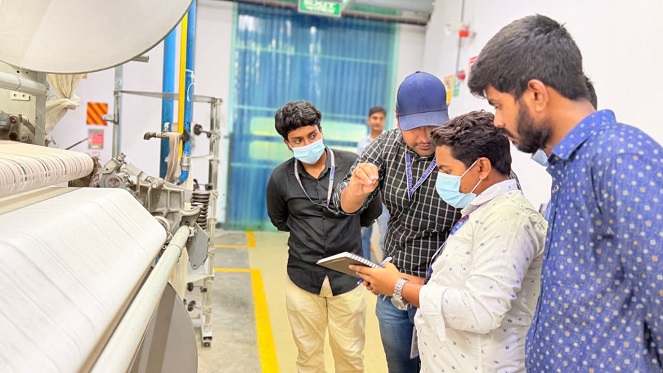
Reinforcing its commitment to industry-oriented education and
experiential learning, the Department of Textile Engineering & Fashion
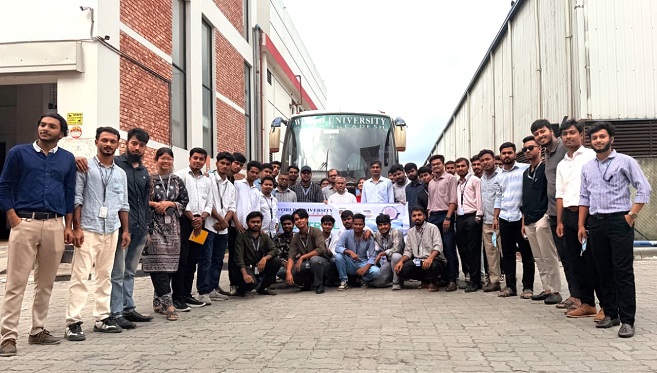
Design of the World University of Bangladesh (WUB) organized an Industrial
Visit to Akij Textile Mills Ltd., Golora, Manikganj. The initiative was
undertaken to provide undergraduate students with first-hand exposure to the
operations of a modern integrated textile manufacturing facility and to
strengthen the linkage between academic learning and industrial practice.
The WUB delegation consisted of 45 undergraduate students accompanied by
two faculty members from the Department of Textile Engineering & Fashion
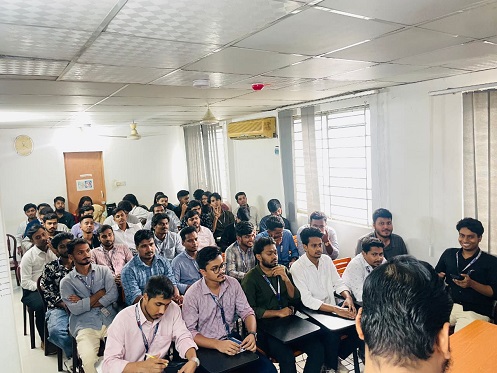
Design. Upon arrival, the delegation was warmly welcomed by Mr. Mohammad Zakir
Hossain, Deputy General Manager (HR, Administration & Compliance); Md.
Shariful Islam, Deputy General Manager (Spinning Units 1 & 2); and Md.
Shafikul, Deputy General Manager (Spinning Units 3 & 4 and Research &
Development) of Akij Textile Mills Ltd.
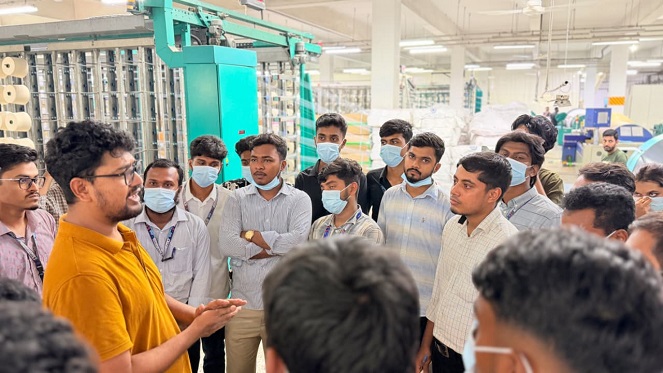
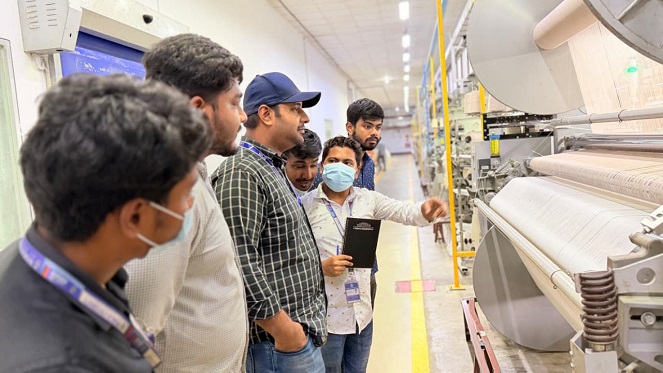
During the guided factory tour, the participants visited the company's
Spinning, Weaving, Yarn Dyeing, Fabric Dyeing, and Recycling Units. Experienced
industry professionals provided detailed explanations of each stage of the
manufacturing process, covering fiber preparation, yarn production, fabric
formation, dyeing operations, quality assurance procedures, waste segregation,
material recovery, and recycling practices.
Representatives of Akij Textile Mills Ltd. expressed their appreciation
for the university's initiative in promoting stronger collaboration between
academia and industry. They emphasized that industrial exposure plays a vital
role in developing technically competent, environmentally responsible, and
industry-ready graduates who can effectively address the evolving challenges
and opportunities of the global textile and apparel sector.
The Department of Textile Engineering & Fashion Design expressed its
sincere gratitude to the management of Akij Textile Mills Ltd. for their
generous hospitality, excellent arrangements, and continued support for academy–industry
collaboration. The department remains committed to organizing similar
experiential learning initiatives that enrich students' practical knowledge,
strengthen professional competencies, and prepare future textile engineers and
fashion professionals to meet the demands of a rapidly evolving industry.